Case study: UX Research and Content Development at MD Anderson
Leading research and strategy on the Data Literacy team at the world’s top rated cancer research center.
My role: I acted as lead Content Developer on the Data Literacy team, which sat inside the larger Data Impact and Governance (DIG) team. We were a scrappy group of four multi-hyphenate, multi-skilled women working together to build a bespoke data literacy certification program to comply with statewide regulations newly issued in Texas. My responsibilities included content strategy work, UX research and writing, content development, grant writing, web design pitch decks, presentation design, and UX consultation within the AI Governance Task Force.
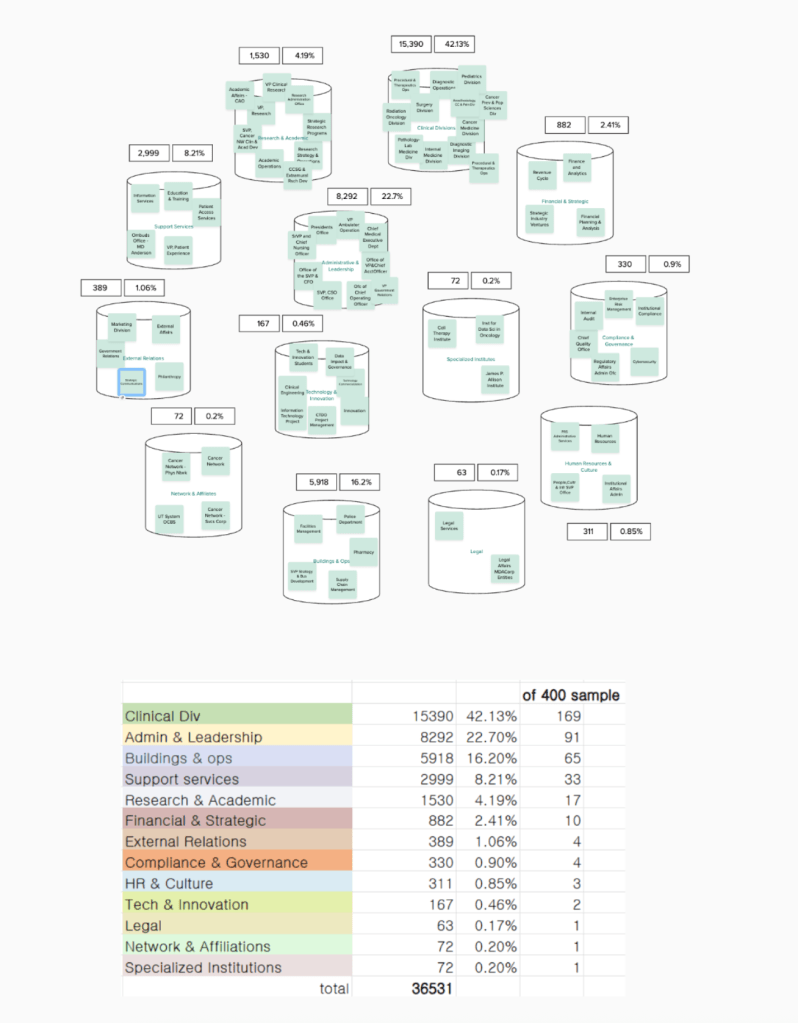
About the project: DIG Leadership at MD Anderson made the decision in the months prior to my arrival to build a data literacy certification course from scratch to comply with the Texas DRI initiatives. This was an ambitious and expansive proposal for an institution with over 25,000 staff serving in roles as diverse as professors, oncologists, public policy experts, nurses, security personnel, IT, roboticists, student liaisons, university administrations, hospital management, and more.
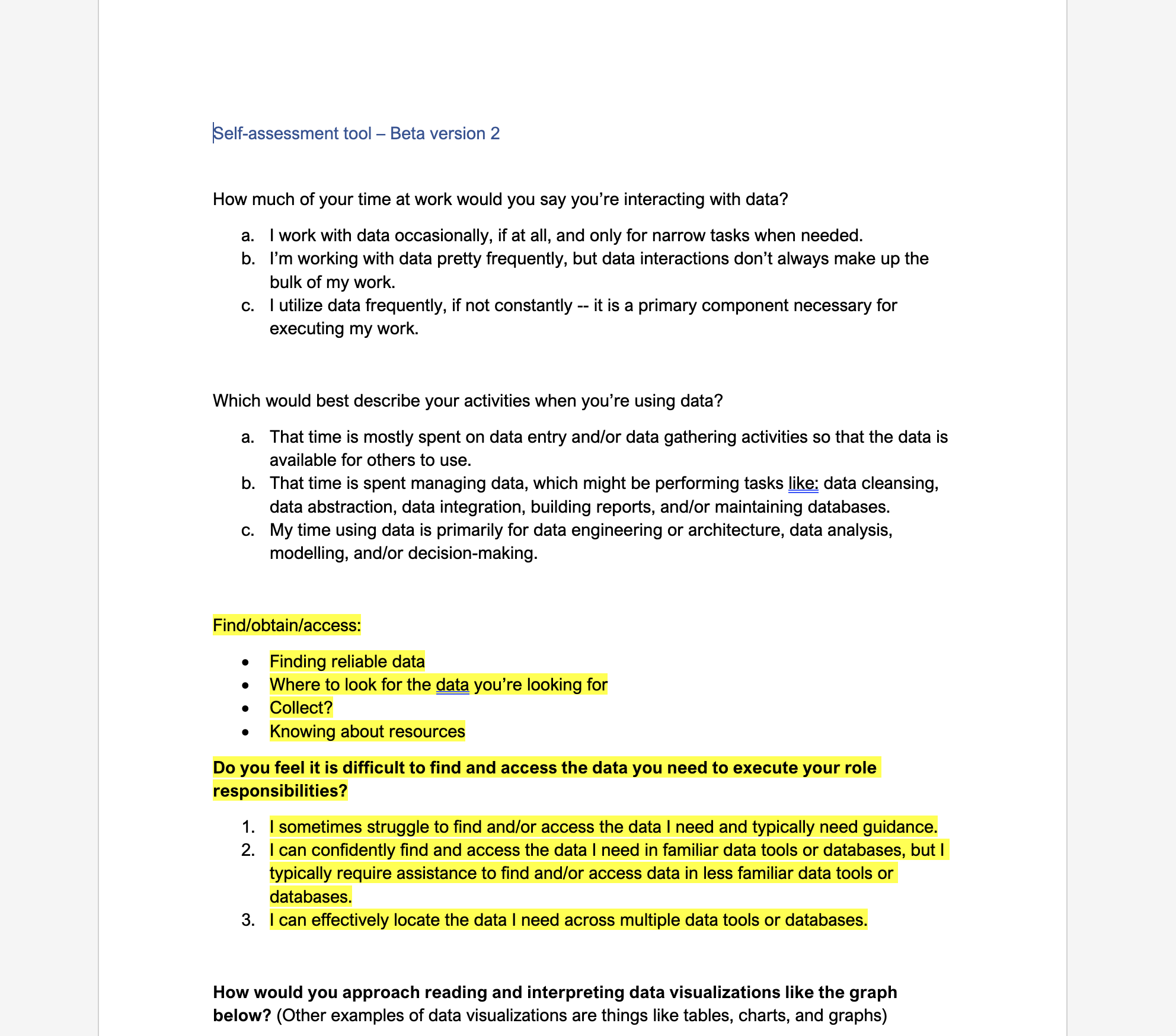
In order to create meaningful and engaging data literacy content for such a broad workforce, our team first needed to create learner personas. Following best practices and standards for UX testing combined with principles of andragogy, we built a 9-part placement matrix. Together with my colleague, we designed a fifteen-question self-assessment tool, with questions corresponding to the core competencies of data literacy as defined by internal and external metrics.
The questionnaire and matrix went through 5 rounds of alpha testing, followed by 4 rounds of beta testing. I designed the strategy for each testing round and collaborated directly with experts on the Innovation and Technology team on focus group design, methods for reaching statistical significance, survey design, and more. Each round of testing and analysis went through executive review, at one point being tested even by the President of the institution. As a rigorous academic establishment, each component of my work needed to be pitched and justified and delivered at the highest professional level.
Business objective: Beyond being required to provide a certification program which covered state requirements, as a cutting-edge institution, MD Anderson sets the gold standard in medical breakthroughs as well as in training the preeminent oncologists and cancer researchers in the world. Executive leadership on the DIG team saw our bespoke learning development process and program as an opportunity to lead in this space as well. An innovative, gamified, and totally original program would help bring in grant funding to the program, as well as eventually serve as a revenue generator if we packaged it to sell to similar organizations across the state.
Challenges: A challenge particular to this project that I honestly saw as an incredible opportunity was in keeping the assessment tool, the personas, and the learner placement and journey as non-hierarchical as possible. All too often in persona building – particularly around technology adoption and understanding – biased language seeps into persona development. I made great pains in pushing against this trend within this project. Knowing that we were already starting from the position of the concept of literacy as being something defining a deficit (you either have literacy or not), this meant getting creative.
My solution to this was to gamify the certification process, inventing characters with neutral names, and positioning the learner journey as a “quest” rather than an obviously linear achievement path. This also would serve to generate word-of-mouth buzz, inspire joy and play in the process, drive engagement, and differentiate our program from others.
Additional challenges came primarily from the reality of working in such a tiny and brand new department nestled within a massive government-academic-medical-nonprofit infrastructure. Things moved significantly slower than in the private sector, and everything was subject to a seemingly endless review process. As you can see from my project management map and the intricate rationale/standards mapping, my pitches and testing approval requests had to be robust.

Final design:
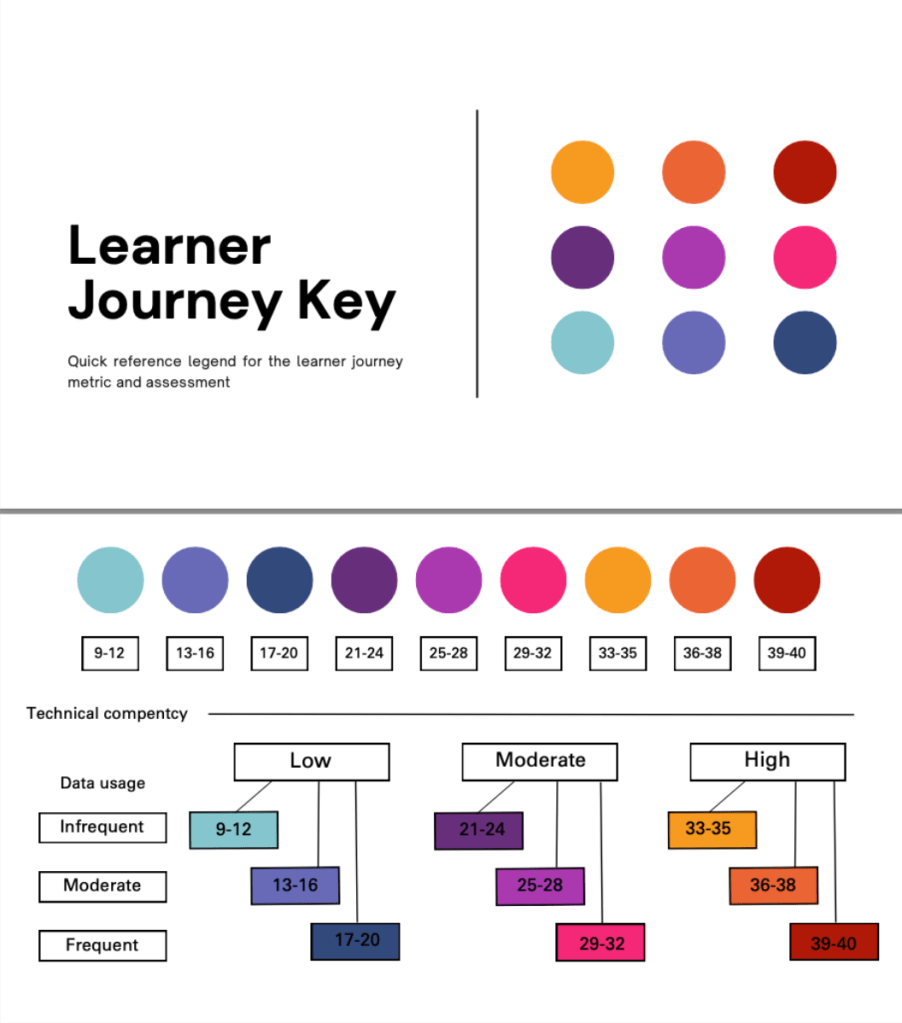

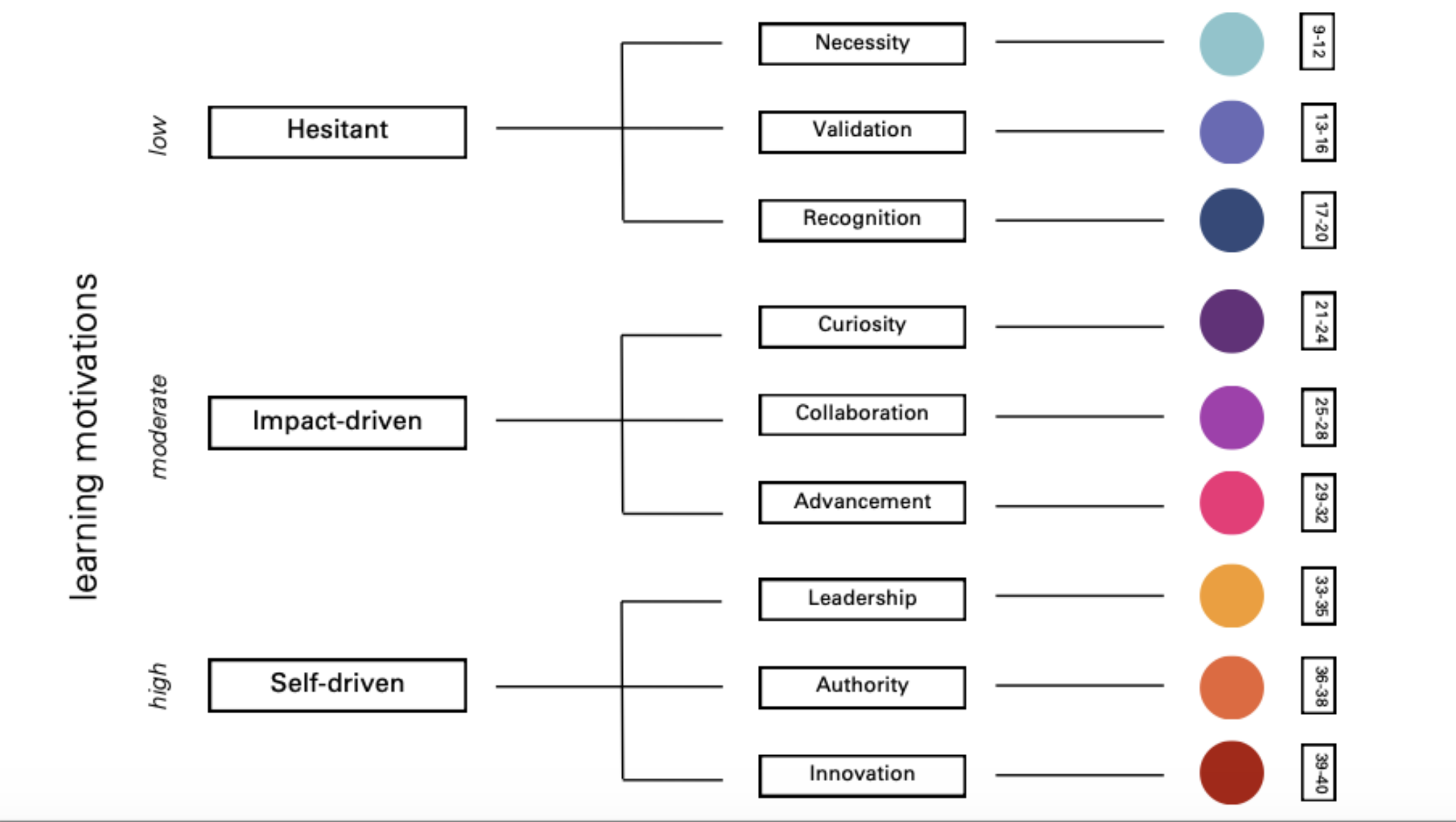

Outcome: On the strategy side, I defined nine unique learner personas, helping to build the learner journey map, and connecting personas to our more well-defined core competency framework. I utilized my creative side to design some really cute robot characters with fun names like Giga, Vector, and Nano. The user journey was well mapped, easy to define and track, was kept engaging and non-hierarchical, and I instituted the gamification of our certificate program. We received support and recognition from the President of the university, our consulting colleagues at Gartner, and were asked to present two years in a row at the Texas DRI summit.
 Emily B Flynn